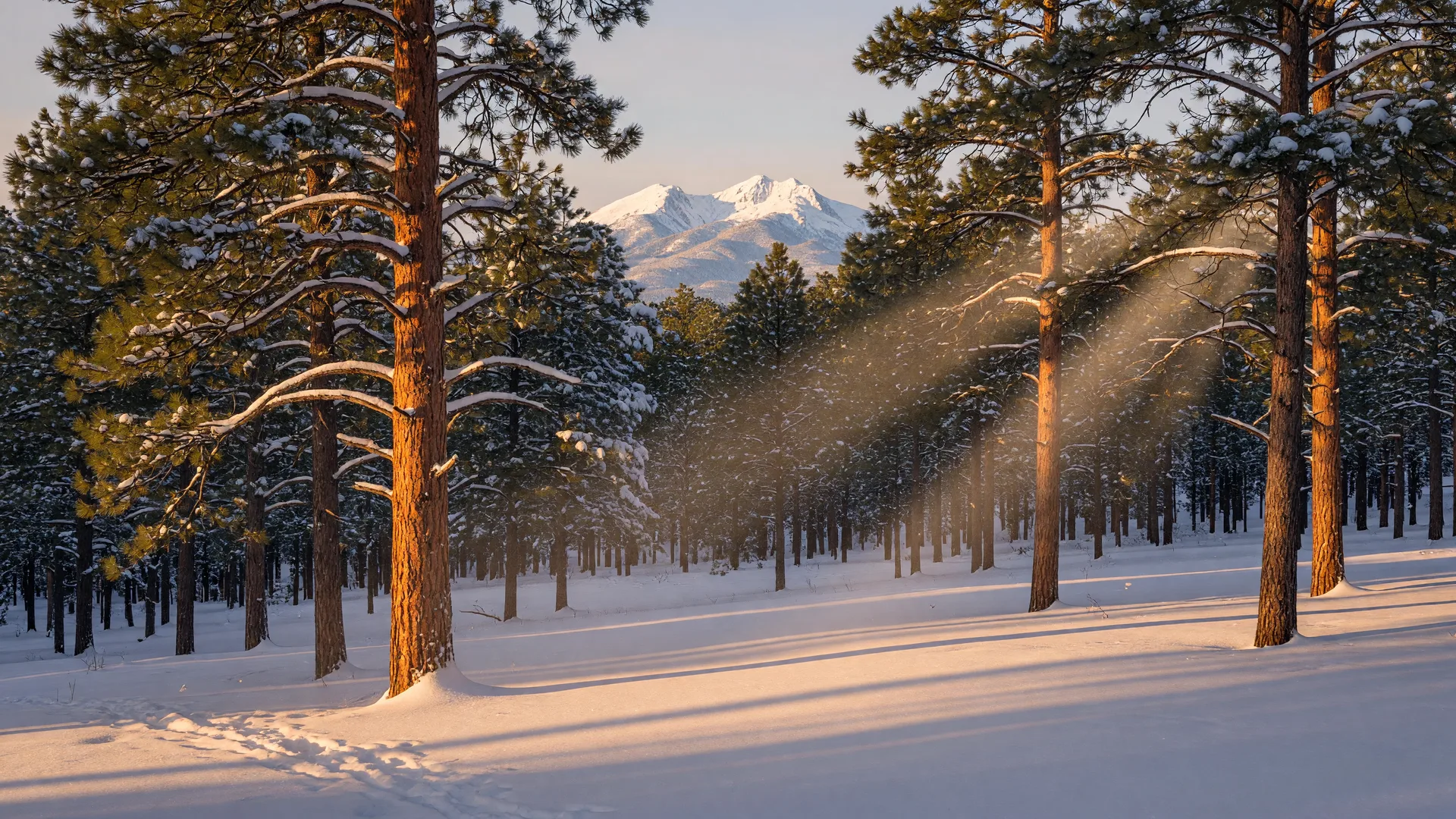
Flagstaff sits at roughly 7,000 feet, high enough that the ponderosa forest owns the landscape and the seasons announce themselves without apology. For anyone considering a homesite at Pine Valley, a year in Flagstaff is worth understanding before the first shovel of snow.
Winter
Winter is the season Flagstaff is famous for, and it earns the reputation. Snow arrives early, stays deep, and quiets everything under it. The San Francisco Peaks hold snow long into spring, and the runs at Arizona Snowbowl, on the slopes of the Peaks themselves, are minutes from home. A home here is designed for this: big windows for light, deep overhangs for shade in summer and snow management in winter.
Spring and summer
Spring melts the meadow green and sends water down to the pond. Summer is the payoff: 70-degree days, mountain air, and evenings that stay light late. The trails fill with runners and riders, and the forest keeps its own cool even in July. This is when the community is at its most social, with long dinners on gathering terraces and firelight until the stars come out.
Fall and the dark
Fall turns the hillsides gold, a brief and brilliant season that locals measure in days, not weeks. And then there is the sky. Flagstaff is the world's first International Dark Sky City, and Lowell Observatory has watched these stars for more than a century. On a clear night at Pine Valley, the Milky Way is a landmark as reliable as the Peaks themselves.
A Flagstaff year is not for everyone. It is for people who want real seasons, a true mountain town, and land that looks different every week. That is the life Pine Valley was planned around.